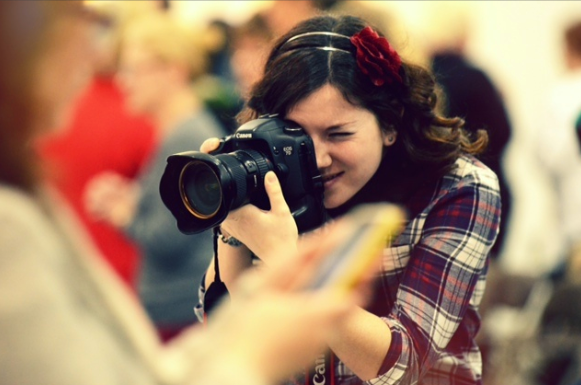
Have you ever come across a photograph that was so powerful, so poignant, and so full of life that it took your breath away? An image so captivating that you can’t help but stop and take notice? A photo that transports you out of your desk into the exact moment of time that was captured?
In a way, we are all storytellers shooting images to convey the story we envision. No matter where we live, no matter the subjects we photograph, we have a chance to create a narrative.
As photographers, we have so many options at our fingertips. The list of ways to craft your storytelling and bring more depth and engagement to your images seems limitless. Although there are infinite ways to learn and grow as communicators, here are five strategies that I love to incorporate into my images. These elements will enhance your storytelling so that your images wow your audience.
Left to right rule
Let’s start with the basics. Before positioning yourself to take a photo it is good practice to think through all the elements of composition, especially the left to right rule. If a subject is moving from one side of your frame to the other, it’s best to photograph them moving from the left side of the frame to the right side. Since our eyes are used to moving from left to right, we subconsciously expect a subject to move that same direction in an image.
If it is impossible to direct the movement in a photoshoot, don’t fret. One quick fix I learned during a photo assignment while interning as a photojournalist was to simply flip the image with editing tools via Adobe Photoshop or Lightroom. This trick works great just as long your frame doesn’t include any lettering.

Layers add depth
Layering objects in your composition allows you to give the illusion of depth and, dare I say it, tell deeper stories. With a simple shift in camera position you can change your focal length and create different layers in your image. These layers include the foreground, middle-ground and background. Let’s take a look at a simple example:
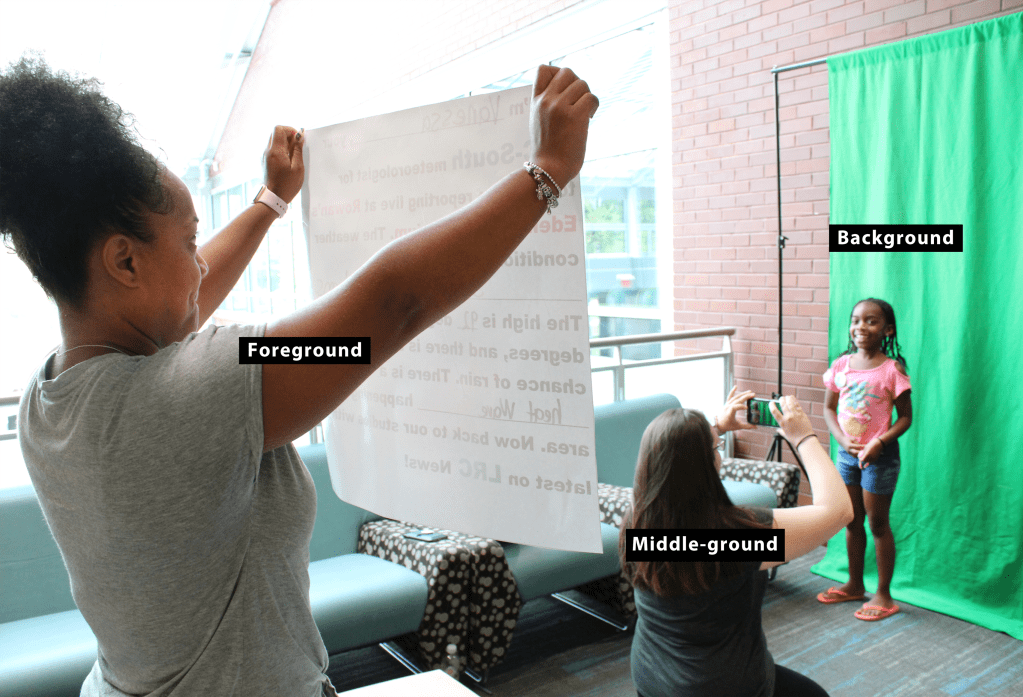
In this image, I have used layers to add interest and depth to tell a story from three different perspectives. In the foreground, we have a mom supporting her daughter with a handwritten teleprompter script, while in the middle ground we have a staff member tapping the performance. The final layer (background) is the daughter who takes center stage in front of the green screen.
By raising the camera and angling the lens down while also positioning myself flesh to my subject, I was able to seize a moment that gives you a true sense of what is actually happening in the shot. Instead of taking a flat photo, I used layers to spice up what could have been a dull composition.
Walk the line
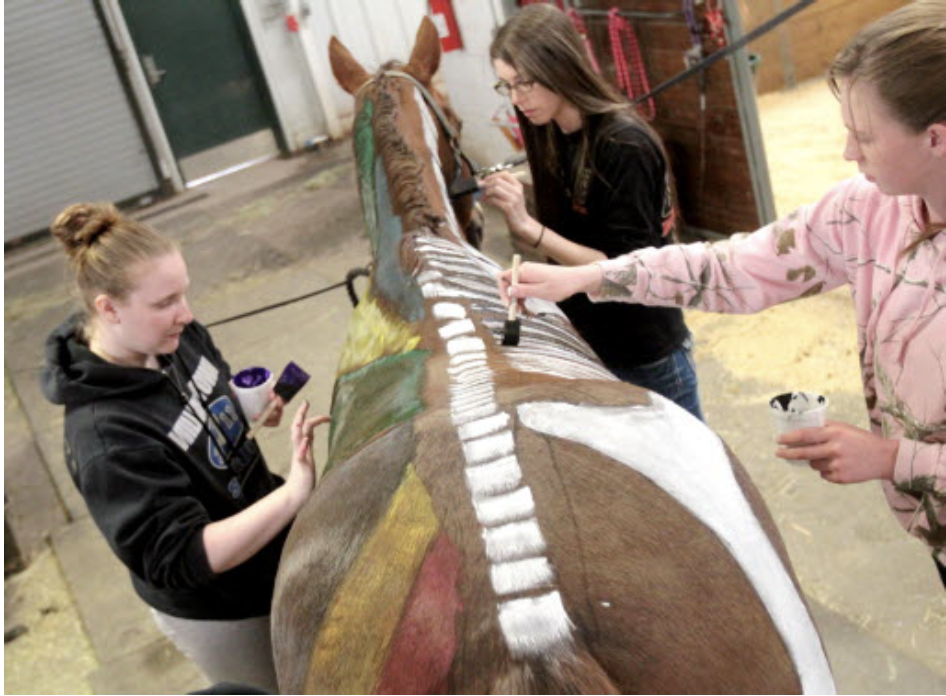
Lines are wonderful storytellers. The use of various forms of line set the mood and help guide the eye through a photograph. Leading lines can be horizontal, vertical, diagonal or curved. I love to incorporate lines into my frames to improve balance and evoke emotions from my audience. Whether its train platforms, a brick wall, a blue sky or even a painted horse, lines are a useful technique to help make an image more pleasing and easier to digest.
Color sets the tone
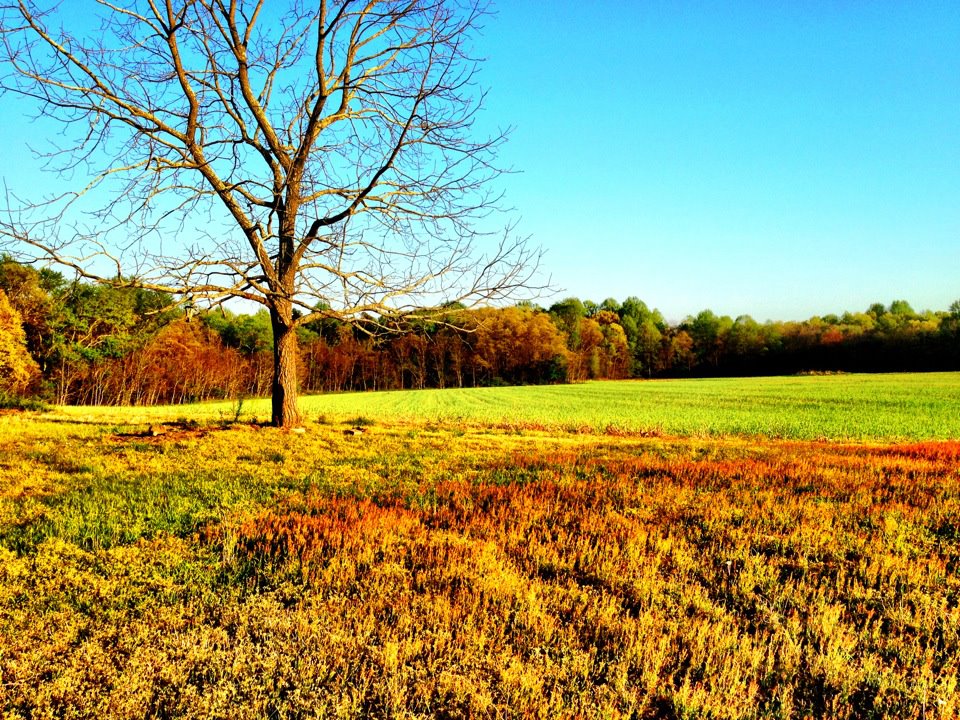
Color can dramatically affect what story your photo tells. The whole mood of a photograph depends on color. From warm to cool, emotions of each color convey powerful messages. The concept of color is technical and can be complicated, but from an artistic level color relationships are a key component to optimizing how your photos look.
Practice, practice, practice
Tell your story on a regular basis. The more you photograph, the more you’ll start seeing elements of strong storytelling everywhere you go. Before you press the shutter button, consider how an image will translate left to right and look for lines, layers and color in the world around you. What matters more than anything else is to capture an image that means something to you and tells the only story that no one else can tell – the story that is yours.
 Emily Senski-Taylor